World War II and its aftermath
War-Shaped Childhoods
For many witnesses, childhood was formed by [World War II](entity:event-recall-event-7e5722c923de): occupied villages, dead relatives, hunger, and the daily work of survival. One psychologist recalled seeing birth and death as neighboring facts of life, memories that later failed to protect him from [Chernobyl](entity:location-recall-location-eb14c8876349).
The war also left a durable language of sacrifice and obedience. Generations grew up expecting catastrophe to arrive as war, while learning to endure it collectively rather than protect themselves individually.
The Soviet period, before April 1986
Faith in the Atom
Nuclear power was presented as a clean promise of modern life. Scientists and citizens alike were taught to admire physics, trust official expertise, and believe that the peaceful atom could be mastered.
That confidence was bound up with Soviet ideals of collective purpose and technological progress. When the reactor failed, people lacked both reliable information and a language for imagining an invisible, long-lasting danger.
Before April 26, 1986
A Love Before Disaster
In [Pripyat](entity:location-recall-location-747ef42e6f61), [Lyudmilla Ignatenko](entity:character-recall-character-lyudmilla-ignatenko-d79acd3b5a2d) and [Vasily Ignatenko](entity:character-recall-character-vasily-ignatenko-43637d039cbf) were newly married and still delighted in the ordinary intimacy of their life together. They shared a dormitory kitchen with other young couples, and Lyudmilla knew the rhythms of her firefighter husband's work.
Their happiness gives the disaster its most personal measure. The catastrophe would turn a young marriage into a vigil, while leaving Lyudmilla to carry both love and grief into the years that followed.
April 26, 1986, 1:23 a.m.
The Reactor Explodes
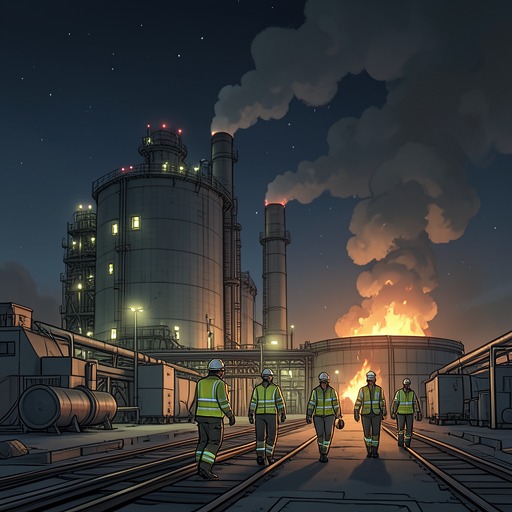
A series of explosions destroyed [Chernobyl Nuclear Power Plant Unit 4](entity:object-recall-object-chernobyl-nuclear-powe-97bf31d43ce8). The first blast killed plant worker [Valery Khodemchuk](entity:character-recall-character-valery-khodemchuk-268b73184d5b), whose body remained trapped beneath the concrete, while fire and radioactive material spread from the ruined reactor.
The disaster was not immediately understood by the people living nearby. Its scale would become visible through illness, contamination, and the movement of radioactive particles across borders, not through a clear announcement at the moment of impact.
The night of April 26, 1986
Firefighters Enter the Ruins
Firefighters, including [Vasily Ignatenko](entity:character-recall-character-vasily-ignatenko-43637d039cbf), were sent to the reactor without being told that the burning material was highly radioactive. They went in ordinary work clothes and tried to beat down flames on the roof, where burning bitumen and graphite made the scene unlike an ordinary fire.
Several firefighters suffered catastrophic radiation exposure. Their courage became part of the official story of rescue, but their lack of warning and protection revealed the human cost of a system that treated the emergency as a task to be completed before it was understood.
April 26, 1986, morning
The First Deaths
At the hospital, Lyudmilla learned that her husband and the other firefighters were gravely ill. A cameraman died that morning, and she and the other wives did not yet know that more deaths would follow.
Doctors urged Lyudmilla to bring Vasily milk, while officials and medical staff spoke of gas poisoning rather than radiation. The gap between what was happening to the men and what their families were told shaped the first hours of terror and confusion.
April 26, 1986, later that morning
Milk for the Firefighters
Lyudmilla and another firefighter's family drove to a nearby village and bought milk for the men. The patients vomited after drinking it, but no one explained the radioactive danger to the wives, who still believed they could help through familiar acts of care.
Military vehicles filled the town, roads were closed, and workers washed streets with white powder. Residents continued buying and eating ordinary food because the invisible contamination had not been made intelligible to them.
April 26-27, 1986
A City Told to Wait
Residents of [Pripyat](entity:location-recall-location-747ef42e6f61) were told that an evacuation might last only three to five days. Many packed warm clothes, radios, and food as if preparing for a brief outing, while the wives of the firefighters alone understood that something far worse might be happening.
The reassurance turned evacuation into a bewildering rupture. People left homes, pets, and belongings believing they would soon return, while the authorities withheld the scale and duration of the danger.
April 29-May 6, 1986
Radiation Reaches Europe
Instruments detected elevated radiation first in Poland, Germany, Austria, and Romania, then across much of Europe and beyond. Within days, particles from the accident had been registered as far away as Japan, India, and North America.
The spread made [Chernobyl](entity:location-recall-location-eb14c8876349) an international disaster even as the Soviet authorities resisted candid public disclosure. Its invisible fallout traveled faster than trustworthy explanations.
Late April 1986
Belarus Under the Cloud
The radioactive cloud moved over [Belarus](entity:location-recall-location-c5bd32c9cdc7), where residents continued daily life without knowing what was in the air, food, and soil. A nuclear physicist measured dangerous readings in towns near the plant while people sowed fields and prepared Easter food.
Warnings were dismissed or delayed as officials prioritized calm and the agricultural plan. The resulting exposure reached people who had neither caused the accident nor been given the information needed to protect themselves.
April 26-29, 1986
Nesterenko Warns the Authorities
[Vasily Borisovich Nesterenko](entity:character-recall-character-vasily-borisovich-n-2264a99ee6a9) tried repeatedly to reach [Nikolai Slyunkov](entity:character-recall-character-nikolai-slyunkov-d6d8f65c91e9) and urged immediate iodine prophylaxis and evacuation around the plant. He traveled through contaminated towns and saw people working outside while radiation measurements rose to alarming levels.
He sent reports and maps through official channels, but his warnings met obstruction and political reassurance. The conflict exposed a hierarchy in which protecting authority mattered more than allowing experts to warn the public.
May 1, 1986
The May Day Procession
Despite the reactor accident and the radioactive cloud, public celebrations proceeded, including the [May Day](entity:time-recall-time-0f481ff09528) parade. Families and children joined the crowds, while officials presented normality as proof that the situation was under control.
Some witnesses later remembered that they had not been physically forced to attend; they went because collective duty and trust still governed their choices. The procession became a lasting emblem of the gulf between official performance and the danger people were not told to fear.
Late April 1986
The Firemen Fly to Moscow
The severely irradiated firefighters were transferred from [Pripyat](entity:location-recall-location-747ef42e6f61) to [Hospital No. 6](entity:location-recall-location-838fcf9ae511) in [Moscow](entity:location-recall-location-19aceb5ce281). Their station clothes were burned, and their wives were told to bring replacement clothing, only to discover that the plane had already left.
The women understood that they had been deliberately kept away from the departure. For Lyudmilla, reaching her husband became a struggle against barriers, secrecy, and the fear that every delay might be final.
Late April 1986, after the transfer
Lyudmilla Reaches Vasily
Lyudmilla found her way into [Hospital No. 6](entity:location-recall-location-838fcf9ae511) and concealed her pregnancy so she would not be sent home. [Angelina Vasilyevna Guskova](entity:character-recall-character-angelina-vasilyevna-b41333290355) warned her of the severity of Vasily's condition and restricted her visits, but Lyudmilla resolved not to leave him.
She cooked and carried food, bought soap and towels, and tried to make their hospital room resemble ordinary life. The effort could not reverse the poisoning, but it became the form her devotion took as Vasily's body began to change.
Late April and May 1986
The First Evacuation of Villages
Authorities began moving people from villages around the contaminated region, often telling them to leave for a short time and forbidding them to take belongings. Soldiers and buses entered the settlements while livestock, families, and household life were abruptly broken apart.
Many residents compared the scenes to wartime displacement. They could not understand why familiar land, homes, and food had suddenly become dangerous, especially when the landscape remained beautiful and apparently unchanged.
During the first evacuations, 1986
The Animals Left Behind
Evacuated residents left dogs, cats, and other household animals behind, often expecting to return. The animals waited in yards and followed the departing buses, while some elderly residents secretly continued feeding them.
The authorities later ordered hunters to kill the animals to prevent them from carrying contamination out of the Zone. The culling turned a public-safety measure into a painful encounter with the abandoned bonds between people and their animals.
May 9, 1986, Victory Day
The Firework and the Carnations
In the hospital, Vasily woke and asked whether it was day or night. Lyudmilla opened the window so they could watch [Moscow](entity:location-recall-location-19aceb5ce281)'s [Victory Day](entity:time-recall-time-4e71b62c87a6) fireworks, and he gave her three carnations he had arranged for the holiday.
The moment joined the public celebration of victory to the private knowledge of a young couple facing death. Their tenderness continued even as doctors forbade touching and Vasily's radiation injuries worsened.
May 1986 onward
The Roof-Clearing Shifts
Soldiers and other summoned workers were sent to clear radioactive debris from the reactor roof after remote-controlled equipment failed in the radiation. They used shovels, worked in brief shifts, and were often given inadequate protection and incomplete dose records.
The men came to be called [green robots](entity:expression-recall-expression-green-robots-d44a11caccc9) because human bodies could perform work that machines could not. Their assignments embodied both the emergency's practical necessity and the Soviet ethic that made dangerous self-sacrifice seem like a duty.
The first days after April 26, 1986
The Sandbags and the Burning Core
Helicopter crews dropped sand and other material toward the burning reactor from above, while firefighters and workers confronted the aftermath at ground level. The operation was frantic, and later assessments questioned whether some of the dropped material had made conditions worse.
Even so, witnesses believed that the effort helped avert an even larger catastrophe. The intervention illustrated the book's recurring contradiction: grave mismanagement and secrecy existed alongside extraordinary labor under lethal conditions.
Summer 1986
Digging Up the Contaminated Earth
Drafted and volunteer crews removed soil, vegetation, and debris from contaminated sites, often using shovels and ordinary equipment. One chemical engineer described rolling up the living ground itself, with its grass, roots, insects, and worms, and burying it in pits that often fell short of official standards.
The work was repetitive and sometimes scientifically dubious, yet it gave the crews a task when the danger remained difficult to comprehend. Their slogan, “Fight the atom with a shovel,” captured both the absurdity and the desperate practical labor of the cleanup.
Spring and summer 1986
The Tunnels Beneath the Reactor
Miners were sent to excavate a tunnel beneath the reactor so that engineers could prevent molten radioactive material from reaching groundwater. They worked in extreme heat, often under punishing conditions, to create a route for a protective intervention.
Their labor was later remembered as part of the vast, largely anonymous human effort to contain the disaster. The men were praised as heroes, but the promises made to attract volunteers were not all fulfilled.
May-October 1986
The Summer of Unprotected Work
Cleanup workers spent weeks or months in the Zone, often without reliable dosimeters, protective clothing, or honest explanations of their exposure. Some were told that vodka helped; others were reassured with measurements taken far from their actual work sites.
They drank, played cards, sought company, and tried to live normally between shifts. The ordinariness did not mean the danger was small: illnesses and deaths emerged later, after many workers had returned home.
During cleanup and decontamination, 1986
The Wedding in the Zone
Workers were once ordered to wash a house and its surroundings so that an evacuated couple could return temporarily to film their wedding. The scene was staged as evidence that life could continue on contaminated land.
The propaganda performance showed how official narratives could turn a dangerous place into a backdrop for reassurance. Cleanup labor served not only to contain contamination but also to manufacture images of normality.
During the 1986 cleanup
The Secret Dose Records
Workers were repeatedly told not to discuss what they had seen, and some were required to sign secrecy forms. Dose figures were kept classified or calculated from inadequate readings, leaving men without records that could help doctors understand their later illnesses.
The secrecy continued after the crews returned home. Many found that they could not explain their experiences to families, employers, or medical staff, and that their service brought neither reliable care nor public recognition.
A few months after the explosion
The Hunters Enter the Zone
[Viktor Iosifovich Verzhikovskiy](entity:character-recall-character-viktor-iosifovich-v-56898f901aa8) was told to organize hunters to kill pets left inside the evacuated settlements. With little protective equipment, the hunters entered in ordinary clothes and shot dogs and cats that often ran toward human voices.
The killing became harder as the animals grew hungry and wary, and the disposal pits were sometimes badly prepared. The hunters remembered the work not as an abstract sanitary operation but as a series of encounters with frightened creatures they had been ordered to destroy.
During the animal cull, 1986
The Poodle in the Burial Pit
At the end of one day's work, the hunters had no bullets left for a wounded little poodle trying to climb from the disposal pit. They pushed it back down and buried it alive, an episode that remained lodged in the chairman's memory.
The incident stripped away the distancing language of duty and public safety. It also showed how an operation intended to manage contamination could become careless, improvised, and cruel in practice.
After evacuation, from 1986 onward
The Burning of the Villages
Crews dismantled or buried contaminated houses, schools, trees, wells, and other structures. One child later described how workers washed houses before cranes lowered them into deep pits, leaving a field where a village had stood.
Residents had treated their homes as entire worlds, not disposable objects. The burial of settlements therefore erased not only buildings but family histories, familiar landscapes, and the expectation that evacuees could ever return.
Two years after the evacuation
The Door Taken Home
[Nikolai Fomich Kalugin](entity:character-recall-character-nikolai-fomich-kalu-6c380663df6f) could not leave behind the apartment door on which his father had lain after death and where the family had marked the children's growth. He removed it from his abandoned home and carried it away by motorcycle at night, evading police who mistook him for a looter.
The door was a family relic and a record of a whole life. His later insistence that his daughter had died from [Chernobyl](entity:location-recall-location-eb14c8876349) turned this intimate act of preservation into a demand that the disaster not be forgotten.
May 1986, within two weeks of the accident
Vasily's Final Days
[Vasily Ignatenko](entity:character-recall-character-vasily-ignatenko-43637d039cbf)'s body deteriorated rapidly in [Hospital No. 6](entity:location-recall-location-838fcf9ae511). His skin broke and peeled away, his organs failed, and Lyudmilla stayed close, helping with bedding and care despite warnings about her exposure and pregnancy.
He asked to see their child and suggested names for a boy or a girl. His tenderness survived the transformation of his body, while Lyudmilla struggled to understand how love could coexist with a death she could neither prevent nor make comprehensible.
May 1986
The Firefighters' Funeral
Vasily and other highly radioactive firefighters were buried in [Moscow](entity:location-recall-location-19aceb5ce281) in sealed zinc coffins under strict control. Relatives were told that the dead belonged to the state as heroes, and soldiers prevented the families from approaching freely or bringing the bodies home.
The burial made private mourning subject to official secrecy and radiation precautions. Lyudmilla remembered the plastic wrapping, the rushed ceremony, and the sense that her husband was being hidden from his own family.
Summer 1986, two months after the accident
Natasha's Birth and Death
Lyudmilla went into labor while visiting Vasily's grave and gave birth prematurely to a daughter, whom she named Natasha. The child appeared healthy at first, but doctors soon reported severe liver damage and congenital heart disease; she died within hours.
Lyudmilla was told that the baby's body would not be given to her, and she later learned that the child had been cremated. She buried Natasha symbolically at Vasily's feet and carried a painful belief that the baby had absorbed the radiation that might otherwise have killed her.
Several years after the accident
A Second Child
After losing Vasily and Natasha, Lyudmilla eventually formed another relationship and gave birth to a son, Andrei. Doctors warned that he might be missing an arm, but he was born healthy and became the center of her life.
Her fear of losing him remained acute. During a stroke, she clutched his arm so fiercely that hospital staff had difficulty releasing her fingers, a physical expression of the grief and anxiety that had shaped her survival.
From 1987 onward
The Re-settlers Return
Some evacuated residents returned secretly or openly to villages inside the restricted zone. They rebuilt looted homes, kept animals, grew food, and accepted isolation rather than live in unfamiliar resettlement housing or depend on distant relatives.
Their return was an act of attachment as much as defiance. The land remained dangerous, but it was also home, a place where the dead were buried and where people believed they could still live on their own terms.
The years after 1986
Life Among Empty Houses
The re-settlers lived among abandoned houses, wild animals, and the traces of neighbors who had left. Older residents fed abandoned pets, spoke with the dead at cemeteries, and measured village life by who had died or returned.
Isolation could bring hardship and danger, but some described a freedom from officials and city life. Their stories resist a simple division between safe relocation and irrational return: the familiar landscape carried memory, identity, and companionship that resettlement could not replace.
After the evacuation, during the search for missing residents
A Song Without Words
A neighbor asked that someone find [Anna Sushko](entity:character-recall-character-anna-sushko-ec429f2b32c6), a mute and disabled woman who had been taken away during the transfer of residents. The village had cared for her before evacuation, but afterward no one knew where she had been placed.
The neighbor remembered that Anna sang a wordless sound when she was in pain and asked that the testimony be written down so Anna's homecoming might still be possible. The appeal became a fragile act of communal memory in a landscape where people had been separated without clear records.
The early 1990s
Refugees Find Another Refuge
Families fleeing violence in [Tajikistan](entity:location-recall-location-01caa0db8262) and elsewhere in the former [Soviet Union](entity:location-recall-location-67657886d3d4) settled in abandoned or underused places in the [Chernobyl](entity:location-recall-location-eb14c8876349)-affected region. One family from [Dushanbe](entity:location-recall-location-af9615207526) had escaped a civil war in which neighbors and schoolmates turned on one another.
For these refugees, the danger of radiation seemed less immediate than the danger of armed people. The move revealed how Chernobyl's abandoned land became refuge for those who had lost a homeland to conflict and had nowhere else to go.
After the Dissolution of the Soviet Union
The Lost Soviet Homeland
Russian-speaking families displaced from Central Asia described themselves as people without a country. Their mixed origins and Soviet upbringing no longer fit the new national borders, while suspicion and violence pushed them from places they had considered home.
Some settled in the [Chernobyl](entity:location-recall-location-eb14c8876349) region despite its contamination, where they felt less threatened than in the places they had fled. The new refuge joined two forms of displacement: the aftermath of the nuclear accident and the upheaval of the [Soviet Union](entity:location-recall-location-67657886d3d4)'s collapse.
The late 1980s and 1990s
Children Marked by Radiation
Children from affected areas grew up with illness, hospital stays, and the fear that they might be abnormal or unable to have families. Some were teased as radioactive, while their parents struggled to determine whether symptoms came from exposure and whether medical authorities would acknowledge a connection.
One mother fought for years to obtain official recognition that her daughter's complex congenital conditions might be linked to radiation. Her struggle was not only for treatment, but also to establish that the parents' love and choices were not to blame.
The 1990s
The Schoolchildren's Fear
Teachers described pupils who fainted, struggled to concentrate, and spoke easily about death. Children watched houses and trees being buried, learned medical diagnoses, and sometimes treated dolls as if they were patients who would die.
The adults could not establish a single cause for every illness or despair, but [Chernobyl](entity:location-recall-location-eb14c8876349) had become the framework through which families understood them. The children's altered childhoods made the disaster feel less like a past accident than a future still unfolding.
The late 1980s and 1990s
The Sick Liquidators
Cleanup workers returned to ordinary jobs, but many later developed serious illness, including cancers and blood disorders. Their wives watched husbands weaken and die, often without reliable exposure records or clear explanations from doctors.
Some families learned to interpret symptoms as part of a distinctive [Chernobyl](entity:location-recall-location-eb14c8876349) death, while others were left to care for survivors whose bodies had been permanently damaged. The effects turned a brief period of service into a long domestic aftermath.
From 1986 into the 1990s
A Widow Keeps Her Vigil
[Valentina Timofeevna Panasevich](entity:character-recall-character-valentina-timofeevn-6de73d0f948e)'s husband returned from [Chernobyl](entity:location-recall-location-eb14c8876349) and gradually became gravely ill. She cared for him at home as his speech and appearance changed, refusing to abandon him even when others suggested moving him to a special facility.
Before dying, he asked her to sell the car and spare tire and not marry his brother. Valentina kept his belongings and memories, while their son continued to ask when his father would return, leaving her to hold grief and care together.
From May 1986 onward
The Measurements Behind the Lies
Scientists tested milk, meat, and other products from the contaminated region and found dangerous levels of radioactive material. Some contaminated products nevertheless continued into shops, sometimes without identifying labels, while agricultural production plans remained in force.
The evidence did not automatically produce public protection. Experts were told to keep measuring and watch television, while official statements insisted that conditions were normal, making scientific knowledge coexist with political silence.
The years after the accident
Contaminated Food Re-enters Circulation
People continued to eat food from contaminated land because ordinary supplies were scarce, official guidance was confusing, and familiar food still looked and tasted normal. Some local officials and workers diverted aid or products from the Zone into markets elsewhere.
The practices blurred the boundary between survival, corruption, and complicity. Families who knew that food might be unsafe still had to feed children, while those responsible for controlling distribution often found reasons to look away.
A decade after the accident
The Political Secretary's Defense
A former regional Party secretary defended his decisions during the first days, arguing that officials feared panic and did not understand the full scale of the disaster. He recalled believing scientists who minimized the danger and continuing agricultural work because no one ordered plans to stop.
He also acknowledged that his granddaughter became ill after the accident, yet resisted seeing himself as a criminal. His testimony shows how duty, political loyalty, and self-justification could coexist with the consequences of decisions that exposed the public.
From April 26, 1986, through the following years
The Physicist's Warning
[Vasily Borisovich Nesterenko](entity:character-recall-character-vasily-borisovich-n-2264a99ee6a9) continued to preserve reports, maps, and measurements after officials blocked his attempts to warn them. His Institute's equipment was confiscated, he received threats, and pressure on his work culminated in a heart attack.
He insisted that the evidence be left behind for a future reckoning. His testimony makes the conflict between scientific responsibility and political obedience a central question: what should a person do when institutions conceal a danger they have the power to address?
The years after 1986
The Lost Faith in Physics
A senior physicist recalled the professional pride and almost religious confidence that had surrounded nuclear science before the accident. After [Chernobyl](entity:location-recall-location-eb14c8876349), that faith gave way to questions about whether technological knowledge could control forces that had escaped human understanding.
The accident did not erase science, but it ended the cultural certainty that physics alone could promise a better future. For some witnesses, the collapse of that belief became as consequential as the physical contamination.
By the mid-1990s
Chernobyl as a New Identity
Residents increasingly described themselves not simply as Russians, Ukrainians, or Belarusians, but as Chernobylites. The shared experience separated them from people who had not lived through the contamination, stigma, displacement, and uncertainty.
Teachers and survivors wondered whether they had become a distinct people, bound by a catastrophe that altered how they understood birth, death, home, and the future. The name offered solidarity, but it also marked a social division they had not chosen.
By the mid-1990s
The Zone Becomes a Separate World
Writers, soldiers, scientists, and former residents described the Zone as a world inside the world, where abandoned houses stood among returning animals and time seemed to continue without people. Its landscapes unsettled familiar distinctions between nature and technology, safety and danger, life and death.
[The Zone](entity:concept-recall-concept-the-zone-b54dc36cdfea) resisted easy explanation and sensational stories alike. For those who had been there, ordinary details—an empty house, a cat, a tree, a road—could carry more truth than a grand theory of the catastrophe.
1996, during Svetlana Alexievich's interviews
Testimony Against Forgetting
[Svetlana Alexievich](entity:character-recall-character-svetlana-alexievich-5fd092a61dee) collected testimonies from survivors, workers, officials, scientists, refugees, and families affected by the accident. Their accounts differed in politics and memory, but repeatedly returned to the same struggle: how to speak about an event that exceeded ordinary experience.
The interviews preserve details that official reports and heroic narratives left out, including fear, shame, tenderness, improvisation, and complicity. The act of recording becomes part of the story, a way of keeping both personal suffering and contested truth from disappearing.
After the interviews, near the book's ending
The Final Witness
At the book's close, Alexievich presents herself not as a distant recorder but as someone living within the history she has gathered. She reflects that the people she interviewed had encountered what remained unknown to everyone else, and that she felt she was recording the future.
The catastrophe left no return to the earlier world. Its survivors continued to live with contaminated land, damaged bodies, bereavement, and memories that resisted explanation; testimony became a fragile way to remain answerable to them.